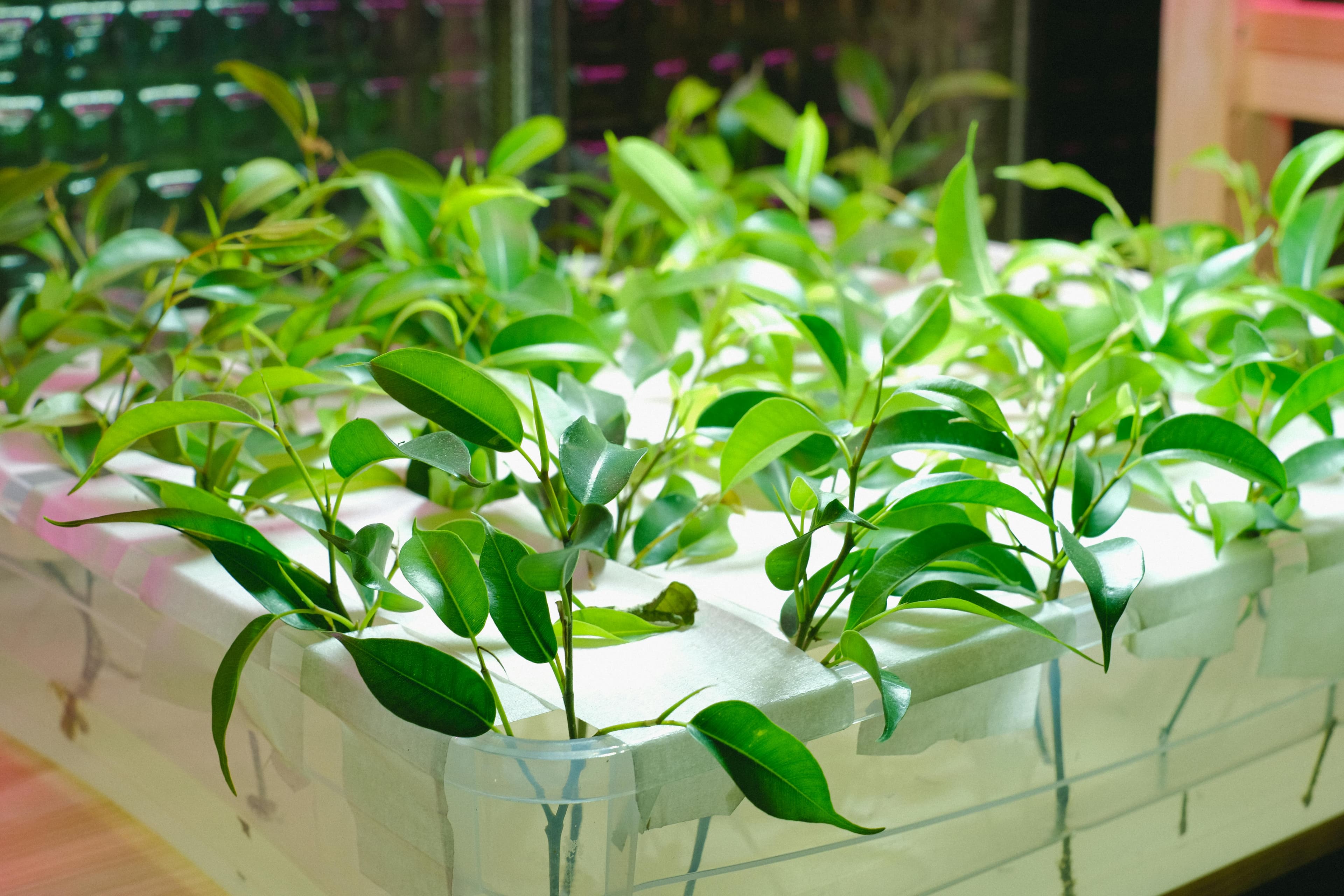
The Kratky method is a passive hydroponic technique where plants grow in a nutrient solution without pumps or electricity. Roots absorb water from below while an air gap forms above, providing oxygen. It requires almost no maintenance.
What is the Kratky method and how does it work?
The Kratky method, developed by B.A. Kratky at the University of Hawaii, is a non-circulating hydroponic technique. Plants are suspended above a reservoir of nutrient-rich water. As the plant drinks the solution, a critical air gap develops between the water surface and the net pot — this gap delivers oxygen directly to the roots.
Unlike deep water culture (DWC) or nutrient film technique (NFT), the Kratky method requires no pumps, air stones, or electricity. The reservoir is filled once (or refilled periodically) and the plant does the rest.
What plants grow best with the Kratky method?
Fast-growing, leafy crops thrive in Kratky systems. The best choices are:
- Lettuce (butterhead, romaine, loose-leaf) — ready in 30–45 days
- Herbs (basil, cilantro, mint, parsley) — continuous harvest possible
- Spinach and arugula — 3–5 week cycles
- Bok choy and kale — suited to larger containers
Fruiting plants like tomatoes, peppers, and cucumbers can work but require larger reservoirs (5+ gallons per plant) and may need intermediate top-ups.
How do you set up a Kratky system at home?
A basic Kratky setup needs only five items:
- Opaque container — any dark bucket, tote, or mason jar (1–5 gallon depending on crop)
- Net pots — 2-inch for herbs, 3-inch for lettuce
- Growing medium — clay pebbles, rockwool, or coco coir
- Nutrient solution — a hydroponic nutrient mix (e.g., General Hydroponics Flora series)
- Seedlings or seeds — start seeds in rockwool cubes
Steps:
- Cut holes in the container lid sized to hold the net pots snugly.
- Fill the container with nutrient solution to just below the net pot bottom (leave a 1-cm air gap immediately).
- Place seedlings in net pots with roots touching or submerged in solution.
- Place in a location with 12–16 hours of light per day.
- Monitor pH (target 5.5–6.5) and EC (0.8–2.0 mS/cm depending on crop stage).
What nutrient solution and pH should I use for Kratky?
The Kratky method uses standard hydroponic nutrients. Recommended parameters:
- pH: 5.5–6.5 (optimal for most leafy greens: 6.0–6.2)
- EC (Electrical Conductivity): 0.8–1.2 mS/cm for seedlings; 1.4–2.0 mS/cm for mature plants
- Nitrogen-phosphorus-potassium (NPK): Balanced formula such as 3-2-6 works well for vegetative growth
Adjust pH using pH Up (potassium hydroxide) or pH Down (phosphoric acid). Test with a digital pH meter for accuracy.
How does the Kratky method compare to DWC and NFT hydroponics?
| Attribute | Kratky | Deep Water Culture (DWC) | Nutrient Film Technique (NFT) |
|---|---|---|---|
| Electricity needed | None | Pump + air stone | Pump required |
| Maintenance level | Very low | Low–Medium | Medium–High |
| Best crops | Lettuce, herbs | Lettuce, tomatoes | Herbs, lettuce |
| Water usage | Moderate | Low (recirculating) | Very low (thin film) |
| Risk of root rot | Low (air gap) | Medium (if pump fails) | Low (thin film, oxygenated) |
| Startup cost | Very low ($5–$20) | Medium ($50–$150) | High ($100–$300) |
| Scalability | Low–Medium | High | Very high |
What are common Kratky method problems and how do I fix them?
Algae growth: Cover the reservoir completely with opaque material. Light reaching the nutrient solution promotes algae that competes with roots and depletes oxygen.
Root rot (brown, slimy roots): Add a beneficial bacteria product (e.g., Hydroguard) to the nutrient solution. Ensure the air gap is maintained — do not overfill the reservoir.
Nutrient deficiency: If leaves yellow, test and adjust EC. Check pH first — nutrient lockout often looks like deficiency.
Slow growth: Increase light intensity or duration. Leafy greens need 12–16 hours of 200–400 µmol/m²/s PPFD.