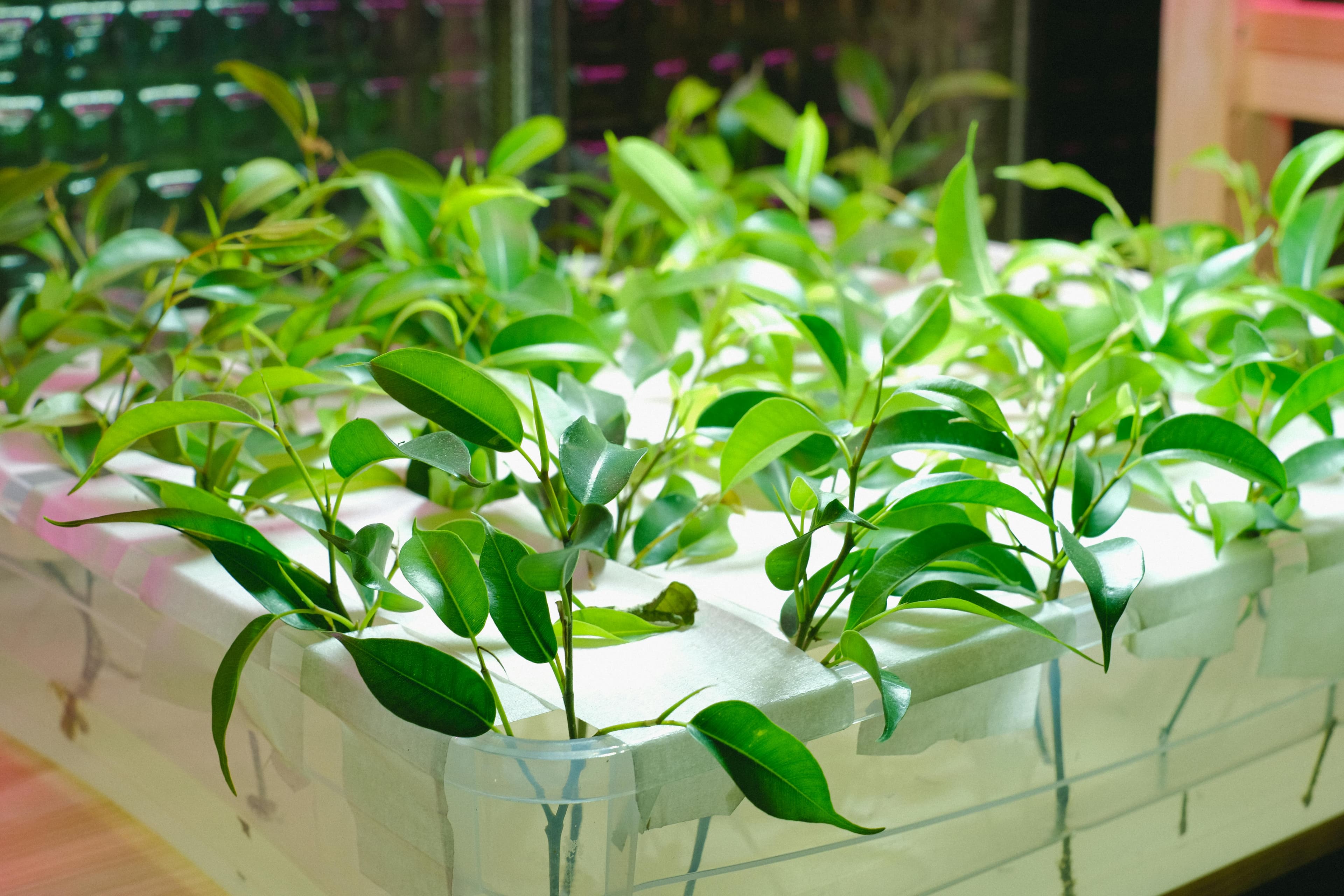
The easiest hydroponic crops are leafy greens and herbs — they grow fast, tolerate moderate nutrient imbalances, and reward beginners with a harvest within 3–4 weeks. Fruiting crops like tomatoes and peppers are more rewarding but require better environmental control and longer investment.
Which plants are the easiest to start with in hydroponics?
Leafy greens are universally recommended as the starting point for hydroponic beginners, and for good reason. Lettuce, spinach, rocket, kale, and pak choi have shallow root systems, low nutrient demands, rapid growth cycles, and are remarkably tolerant of minor pH and EC fluctuations. A lettuce seedling transplanted into a Kratky jar or a simple NFT channel can reach full harvest size in 25–35 days, giving beginners fast, tangible feedback on whether their system is working.
Lettuce in particular is almost foolproof. It thrives at EC levels as low as 0.8 mS/cm — well below the concentration that risks nutrient burn — and tolerates pH from 5.5 to 7.0 without serious problems (though 6.0–6.5 is optimal). Butter lettuce varieties like Butterhead and Little Gem are the most forgiving; iceberg types need cooler temperatures to form heads properly. Loose-leaf varieties can be harvested with a cut-and-come-again approach, continuously cropping from the same plant over several weeks.
Herbs represent the next rung of difficulty. Basil, mint, chives, spring onions, and parsley all grow readily in hydroponics and produce commercially valuable harvests in a small space. Basil is particularly responsive to hydroponic growing, developing larger, more aromatic leaves than soil-grown specimens when kept in warm (22–28 °C), well-lit conditions. Mint grows aggressively and is best kept in its own reservoir to prevent root competition. Chives and spring onions are among the lowest-maintenance crops possible, requiring almost no management once established.
Spinach and other leafy greens close out the easy category. Spinach prefers cooler temperatures (16–20 °C) and benefits from slightly lower EC (1.0–1.8 mS/cm) than lettuce. It bolts (runs to seed prematurely) in hot conditions, so it is better suited to cooler seasons or climate-controlled environments. Pak choi, mizuna, and other Asian brassicas are similarly easy and offer different flavour profiles for culinary variety.
What medium-difficulty plants offer the best reward in hydroponics?
Strawberries sit firmly in the intermediate category and represent one of the most rewarding hydroponic crops. They require careful attention to EC (1.8–2.2 mS/cm in fruiting stage), adequate calcium and potassium for fruit development, and day-length management to trigger flowering — but the payoff is fruit with exceptional sweetness and flavour that often surpasses soil-grown supermarket strawberries. Everbearing varieties like Albion or Seascape are better choices than June-bearing varieties for year-round indoor production.
Cucumbers grow with impressive speed in hydroponics, reaching harvestable size from transplant in 50–60 days. They are heavy feeders with EC requirements of 2.0–2.5 mS/cm and need strong vertical support as they climb. Mini or snack cucumber varieties are more manageable indoors than full-size greenhouse types. Cucumbers are sensitive to calcium deficiency — ensure your nutrient solution contains adequate calcium (200+ ppm) to prevent blossom end rot.
Peppers (both sweet and hot varieties) grow slowly compared with tomatoes but are extremely productive once established. A single hydroponic pepper plant in a 15-litre container can produce fruit for 12–18 months. They prefer EC of 2.0–3.5 mS/cm and temperatures of 21–28 °C. Peppers are more sensitive to overwatering and root rot than most hydroponic crops, so ensure excellent drainage and avoid continuously wet root conditions.
Radishes offer a surprising intermediate option — they are fast (harvest in 25–30 days), but their underground bulb development requires a thicker growing medium layer than standard net pot setups. Growing radishes in coco coir-filled containers in an ebb and flow system works well. Carrots and beetroot are possible but require 30+ cm of medium depth, making them impractical for most indoor setups.
Which fruiting crops challenge advanced hydroponic growers?
Tomatoes are the flagship challenge crop of hydroponics. The potential rewards are exceptional — indoor hydroponic tomatoes can yield 15–25 kg per plant per year with proper management — but achieving this requires consistent attention to nutrient management, environmental control, and plant training. EC must be managed carefully through multiple growth stages: low (1.0–1.5 mS/cm) in propagation, rising to 2.0–2.5 mS/cm in vegetative growth, and up to 3.0–3.5 mS/cm in heavy fruiting. Calcium and magnesium must be adequate at all times. Indeterminate varieties grow continuously and must be trained, supported, and have lower leaves removed regularly.
Melons (cantaloupe, honeydew) are technically achievable but demand excellent growing conditions. They need strong lighting (600W HPS or equivalent LED), warm temperatures (25–30 °C), high EC in fruiting stage (2.5–3.5 mS/cm), and vertical training with individual fruit slings to support the heavy melons as they develop. A well-executed hydroponic melon is extraordinarily sweet and flavourful, but the investment in space, light, and management is significant.
The table below summarises key crops by difficulty and key growing parameters:
| Crop | Difficulty | Days to harvest | Target EC (mS/cm) | Target pH |
|---|---|---|---|---|
| Lettuce | Beginner | 25–35 | 0.8–1.6 | 6.0–6.5 |
| Basil | Beginner | 30–40 | 1.0–1.6 | 5.5–6.5 |
| Spinach | Beginner | 30–45 | 1.0–1.8 | 6.0–7.0 |
| Strawberries | Intermediate | 60–90 | 1.8–2.2 | 6.0–6.5 |
| Cucumbers | Intermediate | 50–60 | 1.7–2.5 | 5.5–6.0 |
| Peppers | Intermediate | 70–90 | 2.0–3.5 | 6.0–6.5 |
| Tomatoes | Advanced | 60–90 | 2.0–3.5 | 5.8–6.3 |
| Melons | Expert | 80–100 | 2.5–3.5 | 5.5–6.0 |
How do you choose the right hydroponic method for each plant type?
Plant characteristics should guide your choice of hydroponic system. Root size and growth habit, nutrient demands, and harvest style all matter. Shallow-rooted leafy greens suit NFT channels perfectly — their compact roots fit within standard channel profiles and their rapid growth cycles allow frequent turnover. Kratky jars are the simplest option for single-plant lettuce or herb production on a kitchen windowsill or under a small LED panel.
Fruiting crops with large root masses and high nutrient demands are best served by DWC buckets, media beds (ebb and flow with clay pebbles in individual pots), or drip systems. These methods provide the reservoir volume and feeding flexibility that heavy-feeding crops require. DWC gives the fastest growth but demands the most consistent aeration and temperature management. Media beds offer more forgiveness and suit growers who cannot check systems daily.
For mixed gardens growing several crop types simultaneously, an ebb and flow tray or drip system gives the most flexibility. You can run different crops at different spacings, in different pot sizes, without modifying the system. This is the setup most recommended for urban farms producing variety for a household or small community kitchen.