Hydroponic green onions (scallions) are among the simplest crops in any soilless system — they can be started from seed or regrown from kitchen cuttings, reach harvest in 3–4 weeks, and support repeated cut-and-come-again harvesting for months without replanting. EC 1.0–1.4 and 12–14 hours of light per day are all the parameters you need to get started.
How do you start green onions hydroponically — seeds or cuttings?
Green onions offer two very different starting methods, each with practical advantages depending on what you have available.
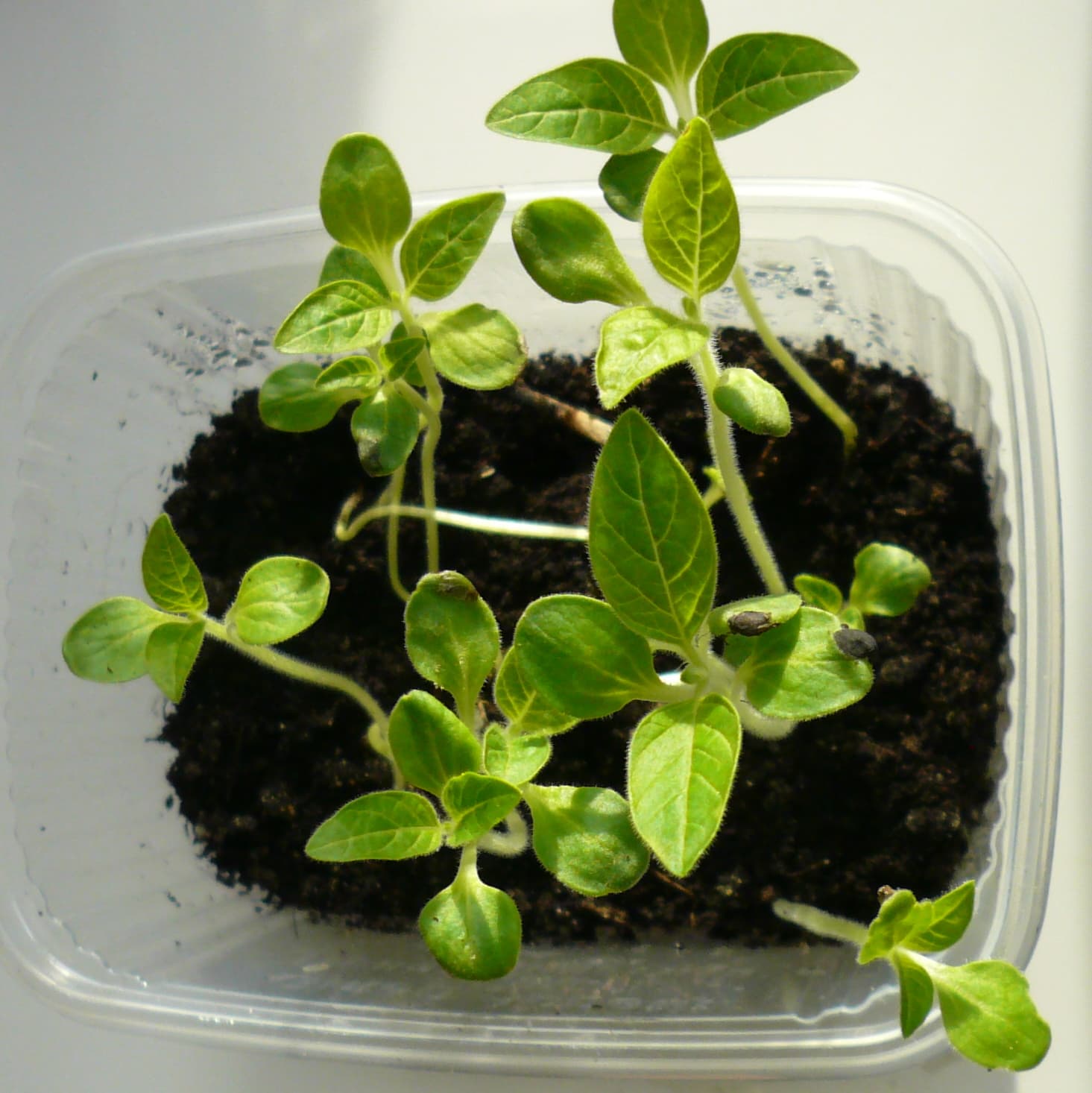
Starting from seed: Sow seeds directly into rockwool cubes, coco coir plugs, or a net pot filled with inert medium (clay pebbles or perlite). Place 3–5 seeds per net pot — green onions are naturally clumping plants and growing several per position produces a fuller, more productive bunch. Moisten the medium with plain pH-adjusted water (6.0–6.5) at sowing; introduce dilute nutrient solution (EC 0.5) once seedlings emerge at day 5–8. Seeds germinate reliably at 15–25°C within 5–10 days. The seedling phase runs 2–3 weeks before stems are usable; full harvest-ready size takes 3–4 weeks total from sowing.
Regrowing from cuttings (the faster method): This is the classic "green onion in a glass of water" technique scaled up for a hydroponic setup. Take store-bought green onions with the white root base intact (at least 2–3 cm of white below the last roots). Place them upright in net pots, anchoring with clay pebbles, so the white base sits just at the water or medium level. Roots emerge within 24–48 hours and new green shoots grow from the centre of each cutting. The first regrowth harvest is ready in 7–10 days. This method bypasses the seedling phase entirely and produces usable greens within one week.
India-specific note: Bundles of green onions (hara pyaz) with intact roots are widely available at sabzi mandis for ₹10–30. These are ideal for the cutting regrowth method. In northern India, green onions are a winter crop field-grown, but hydroponic growing extends their availability year-round in home setups.
How do you nurture hydroponic green onions with minimal nutrients?
Green onions are among the lowest-nutrient-demand crops in hydroponics. Their modest root system and linear growth habit mean they are easy to over-feed — excess nutrients produce fast, floppy growth that is less flavourful than slow, steady growth at lower EC.
Nutrient parameters:
- EC: 1.0–1.4 mS/cm — this is notably lower than most other hydroponic crops. Pushing EC above 1.6 accelerates growth but produces diluted flavour and reduced keeping quality after harvest
- pH: 6.0–7.0 — green onions tolerate a wider pH range than most crops. Keep pH between 6.0 and 6.5 for best nutrient uptake; allow it to drift toward 7.0 only if you lack a pH meter
- Nitrogen: green onions are leafy crops and benefit from moderate nitrogen in a balanced formula. A standard NPK ratio of 3-1-2 (similar to lettuce) is appropriate throughout the growing cycle
- Iron: green onion leaves yellow from the tips first when iron is deficient. Check pH is not above 7.0 (which locks out iron) before adding chelated iron
System compatibility: Green onions grow well in almost any soilless system — DWC, NFT, Kratky, wicking systems, and even simple jars or cups. Their root systems are small and fibrous rather than taprooted, so they do not require the root volume that larger crops need. NFT channels are particularly efficient for commercial-scale green onion production because the thin film of nutrient solution delivers adequate moisture without waterlogging.
How do you care for hydroponic green onions and manage their light requirements?
Green onions are among the least demanding crops in terms of light intensity, but daily light duration has a significant effect on growth rate and the risk of premature bulbing.
Light requirements:
- PPFD: 150–300 µmol/m²/s is sufficient — green onions are shade-tolerant compared to fruiting crops and most root vegetables
- Photoperiod: 12–14 hours per day. This is the most important lighting parameter. Extending beyond 16 hours per day can trigger bulbing in some varieties, converting the plant from a scallion to a single-centred onion rather than producing a bunch of green leaves. Keep photoperiod at 14 hours maximum for sustained leaf production
- DLI: 8–14 mol/m²/day — achievable with a basic T5 fluorescent fixture or a modest LED grow light
- Spectrum: full-spectrum or blue-dominant light produces denser, more compact leaf growth; red-dominant light produces faster but sometimes more open and floppy stems
Spacing: Plant net pots or positions 5–7.5 cm apart. Green onions can be grown more densely than most crops because they grow vertically rather than spreading laterally. A 30 cm × 30 cm panel with 7.5 cm spacing can support 16 positions, each with 3–5 plants — yielding a full bunch equivalent per position.
Air circulation: Green onion leaves have minimal surface area and relatively low transpiration rates, so they are less prone to humidity-related diseases than basil or lettuce. However, adequate air movement prevents the standing moisture at the base of stems that can cause soft rot in the white sections. Run a small fan at the lowest setting to provide gentle air movement.
How does cut-and-come-again harvesting work for green onions?
The cut-and-come-again harvest method is what makes green onions exceptional value in a hydroponic system — each plant can be harvested multiple times without replanting.
| Harvest Cycle | Days from Start | Cut Point | Regrowth Time |
|---|---|---|---|
| First harvest (from seed) | 21–28 days | Cut at 2–3 cm above base | 10–14 days |
| First harvest (from cutting) | 7–10 days | Cut at 2–3 cm above base | 10–14 days |
| Second harvest | 31–42 days | Cut at 2–3 cm above base | 10–14 days |
| Third harvest | 41–56 days | Cut at 2–3 cm above base | 12–16 days |
| Fourth harvest onwards | Variable | Cut at 2–3 cm above base | 14–18 days (slowing) |
Harvest technique: Use sharp, clean scissors. Cut the green leaves 2–3 cm above the base of the plant — the white section and root system remain intact in the net pot. New leaves emerge from the same growing point within 24–48 hours and reach harvestable length again in 10–14 days. Never cut below the growing point at the base; doing so kills the plant.
Rotation strategy for continuous supply: Start two batches of green onions staggered by two weeks. While one batch is in its regrowth phase, the other is at harvest readiness. This simple two-batch rotation provides a continuous supply of fresh green onions every 10–14 days without gaps.
When to replant: After 3–5 cut cycles (roughly 8–12 weeks from a cutting start), plants slow noticeably in regrowth and produce thinner, less vigorous leaves. Replace with fresh cuttings or new seedlings at this point. The spent root mass can be composted.
What is the nutritional value of hydroponic green onions?
Green onions (scallions) are a flavour ingredient used in relatively small quantities, but they contain meaningful levels of several key micronutrients — particularly vitamin K, which is present in amounts that rival dedicated leafy greens.
| Nutrient / Compound | Per 100g Fresh | Notes |
|---|---|---|
| Vitamin K | 207 µg (172% DV) | Extremely high; caution for those on anticoagulants (warfarin) |
| Vitamin C | 18.8 mg (21% DV) | Water-soluble; highest in the green tops, not the white base |
| Folate (B9) | 64 µg (16% DV) | Important for pregnancy and cell division |
| Vitamin A (as β-carotene) | 50 µg RAE (6% DV) | Present in the green leaves only |
| Potassium | 276 mg (6% DV) | Electrolyte; supports cardiovascular function |
| Allicin precursors | Present | Lower concentration than garlic and dry onion; mild antimicrobial activity |
| Calories | 32 kcal | Very low energy density |
Green versus white sections: The green leaf tops contain significantly more vitamin K, vitamin C, and β-carotene than the white base. Using only the white sections (as is common in some preparations) sacrifices most of the nutritional value. In hydroponic growing where both sections are available fresh, using the entire plant including all green tops maximises nutritional benefit.
In Indian cooking, green onions are used raw in salads (kachumber), as a garnish on dal and sabzi, in raita, and chopped into pakoras and chaat. The mild, fresh flavour of hydroponically grown green onions — less pungent than field-grown ones harvested and stored for days — is particularly well-suited to raw applications.