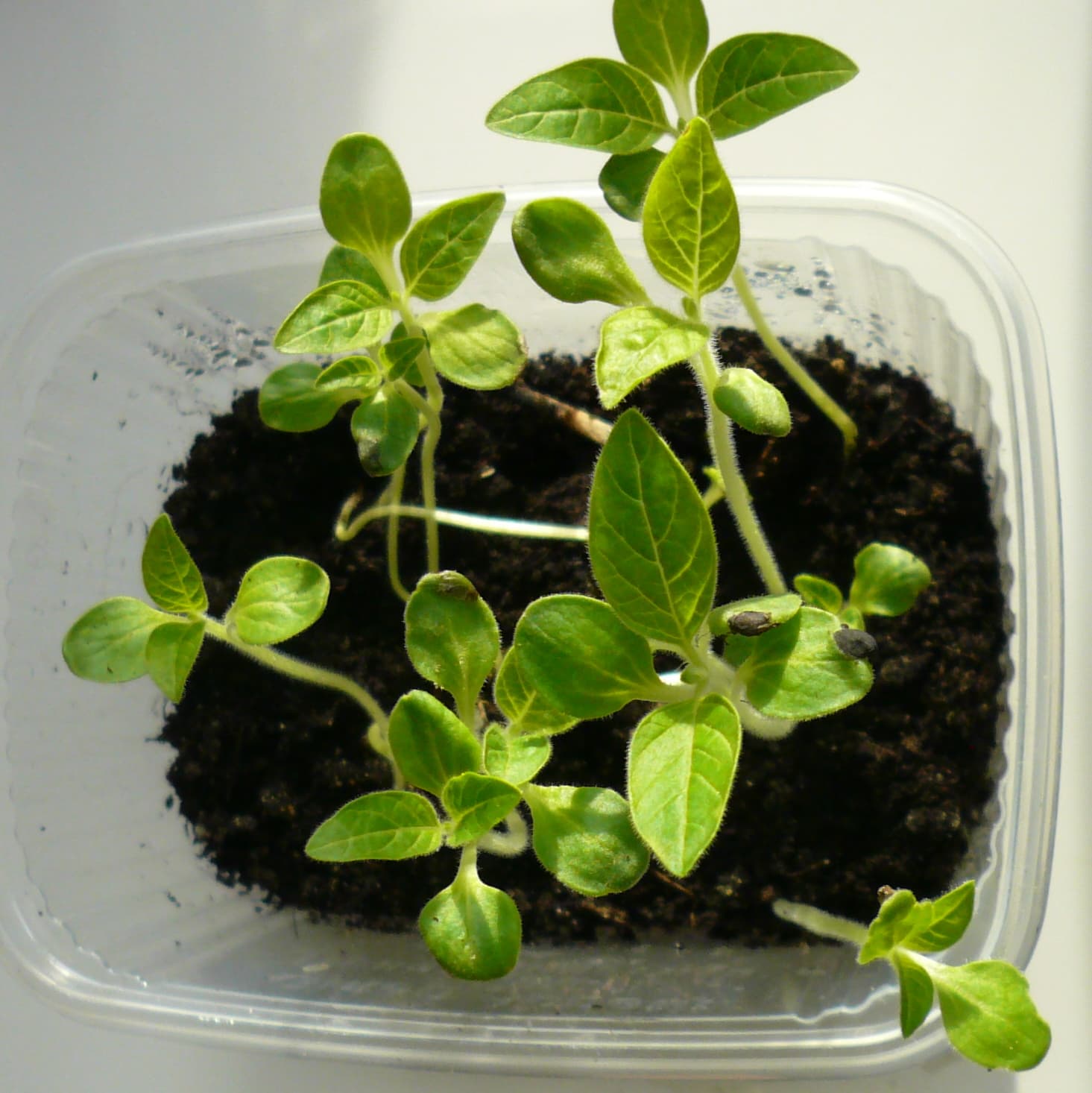
Mint propagates from cuttings in 7–14 days, tolerates lower light than almost any other hydroponic herb, and produces harvests every 2–3 weeks indefinitely. The one rule: keep it in its own dedicated reservoir. Mint will dominate any shared system within weeks.
Why is mint unusual as a hydroponic crop?
Most hydroponic crops are grown from seed. Mint (Mentha spp.) is almost never grown from seed commercially — the resulting plants are highly variable in flavor and potency because mint hybridises freely and seed-grown plants rarely replicate the parent's characteristics. Virtually all culinary mint is propagated vegetatively: cuttings from a known parent plant guarantee identical flavor, menthol content, and growth habit.
This is actually an advantage in hydroponics. A single healthy mother plant produces unlimited cuttings. One initial purchase — a pot of supermarket mint, a cutting from a friend, or a specialist herb nursery — becomes a permanent, self-renewing supply.
The second unusual characteristic is mint's aggressive rhizomatous growth. In soil, mint spreads via underground runners that can colonise an entire garden bed in a season. In hydroponics, this translates to vigorous root growth that can physically block pump inlets, overwhelm other plants' root zones in shared systems, and rapidly deplete nutrients in small reservoirs. Containment is not just a preference — it is a structural necessity.
How do you propagate mint from cuttings?
Mint cuttings root with minimal effort. Success rates above 90% are routine with basic technique.
Selecting cuttings:
- Choose non-flowering stems — if your mint has begun to flower, cut back to vegetative growth first (wait 1 week). Flowering stems have lower rooting success.
- Cut 5–8cm sections just below a node (the point where leaves attach to the stem). Each cutting should have 2–3 leaf nodes.
- Remove the leaves from the bottom 2 nodes, leaving only the top 1–2 pairs of leaves.
Rooting methods:
| Method | Setup | Root Emergence | Notes |
|---|---|---|---|
| Plain water | Glass of water, change every 2 days | 7–10 days | Simplest; root quality is adequate for transfer to hydro |
| Rockwool cube | Pre-soaked cube, humidity dome | 10–14 days | Best for direct transfer to DWC or NFT |
| Aeroponic mist | Fine mist every 15 minutes | 5–8 days | Fastest; requires misting equipment |
Transferring to the hydroponic system: Once roots are 2–3cm long, transfer to your system. Handle roots gently — mint roots are fine and easily damaged. If using rockwool-rooted cuttings, transfer cube directly into the net pot without disturbing the root ball.
How do you nurture mint in a hydroponic system?
Mint is a low-demand herb. Its requirements are closer to lettuce than basil.
- EC: 0.8–1.6 mS/cm. Higher EC produces more concentrated essential oils (higher menthol content and aroma intensity) but slows growth. For high yield, keep EC at 0.8–1.2. For flavor intensity, push toward 1.4–1.6.
- pH: 6.0–7.0. Mint tolerates a wider pH range than most crops — it is one of the few herbs that performs well at pH approaching 7.0.
- Temperature: 15–25°C. Mint naturally prefers cooler temperatures and will bolt (flower and decline) in consistently warm conditions above 28°C.
- Light: 150–250 PPFD for 14–16 hours. This is notably lower than most hydroponic crops — mint evolved under partial canopy in riparian environments. It will grow under much lower light than basil, tomatoes, or chillies. This makes it suitable for lower-light windowsill setups where other herbs would underperform.
- Dissolved oxygen: Mint roots are susceptible to root rot in warm, stagnant water. Ensure adequate aeration — an air stone in a DWC reservoir, or sufficient flow rate in NFT.
How do you manage mint's aggressive growth?
Dedicated reservoir policy: Do not grow mint alongside other herbs or crops in a shared recirculating system. Mint roots grow quickly and prolifically, competing directly with other plants' root zones for dissolved oxygen and nutrient uptake. The standard practice — used in commercial herb production — is to dedicate a separate reservoir or channel exclusively to mint.
A Kratky setup is ideal for mint: a sealed container with nutrient solution and an air gap, no pump required. One 10-litre container supports 3–4 established mint plants and requires only topping up the reservoir as solution is consumed.
Root pruning: If you are running a DWC system and mint roots have grown extensively, they can be pruned by 20–30% without stressing the plant. Use clean scissors sterilised with isopropyl alcohol. Root pruning is also the solution when roots begin to block pump inlets or become entangled with other plants in a system you have chosen to share (accept some risk if doing so).
Stem containment: In NFT channels, mint stems can grow laterally and spill into adjacent channels. Train stems vertically or clip them back regularly.
When and how do you harvest mint?
Mint is ready for its first harvest when stems reach 15–20cm — typically 3–4 weeks after establishing cuttings in the system.
Harvest technique: Cut stems 5–8cm above the lowest node pair. Always leave at least one pair of healthy leaves at the base — this is where regrowth initiates. Do not cut to the root crown. The plant produces new growth from the remaining nodes within 7–10 days.
Harvest frequency: Every 2–3 weeks at peak production. Harvesting stimulates branching — the plant produces multiple new shoots from each cut point, increasing yield over successive harvests.
Drying and storage: Fresh mint lasts 1–2 weeks wrapped in a damp cloth in the refrigerator. For longer storage, dry at 35–40°C in a dehydrator for 2–3 hours until leaves crumble cleanly. Store dried mint in an airtight container away from light — it retains potency for 12 months. Dried mint has 4–6× the menthol concentration of fresh by weight due to water removal.
What mint varieties are available and which should you grow?
| Variety | Flavor Profile | Key Characteristic | Best Use |
|---|---|---|---|
| Spearmint (M. spicata) | Sweet, mild | Lower menthol than peppermint | Cooking, mojitos, salads |
| Peppermint (M. × piperita) | Sharp, cooling | Highest menthol content (40–55%) | Tea, infusions, medicinal |
| Chocolate mint | Cocoa-mint | Unusual flavor compound | Desserts, specialty tea |
| Apple mint (M. suaveolens) | Fruity, mild | Fuzzy leaves, subtle flavor | Tea, salads |
| Corsican mint (M. requienii) | Very intense | Compact growth, very high menthol | Strong tea, liqueur |
What is mint's nutritional and bioactive profile?
Fresh mint is consumed in small quantities — its value is in bioactive compounds rather than macronutrients.
| Compound | Content per 100g | Biological Effect |
|---|---|---|
| Menthol | 0.3–0.9g (fresh) | TRPM8 cooling receptor activation; digestive antispasmodic |
| Rosmarinic acid | 150–200mg | Potent antioxidant and anti-inflammatory |
| Vitamin A (β-carotene) | 212 µg RAE | 24% DV |
| Iron | 5.1 mg | 28% DV (non-haem; absorption variable) |
| Menthone | Varies | Antimicrobial against E. coli and Salmonella |
Peppermint tea made from fresh hydroponic leaves contains significantly more menthol and rosmarinic acid than commercially dried tea bags, which are typically made from lower-quality leaf fractions and lose volatile compounds during commercial drying. Fresh-harvested peppermint at the pre-flowering stage has peak essential oil concentration.