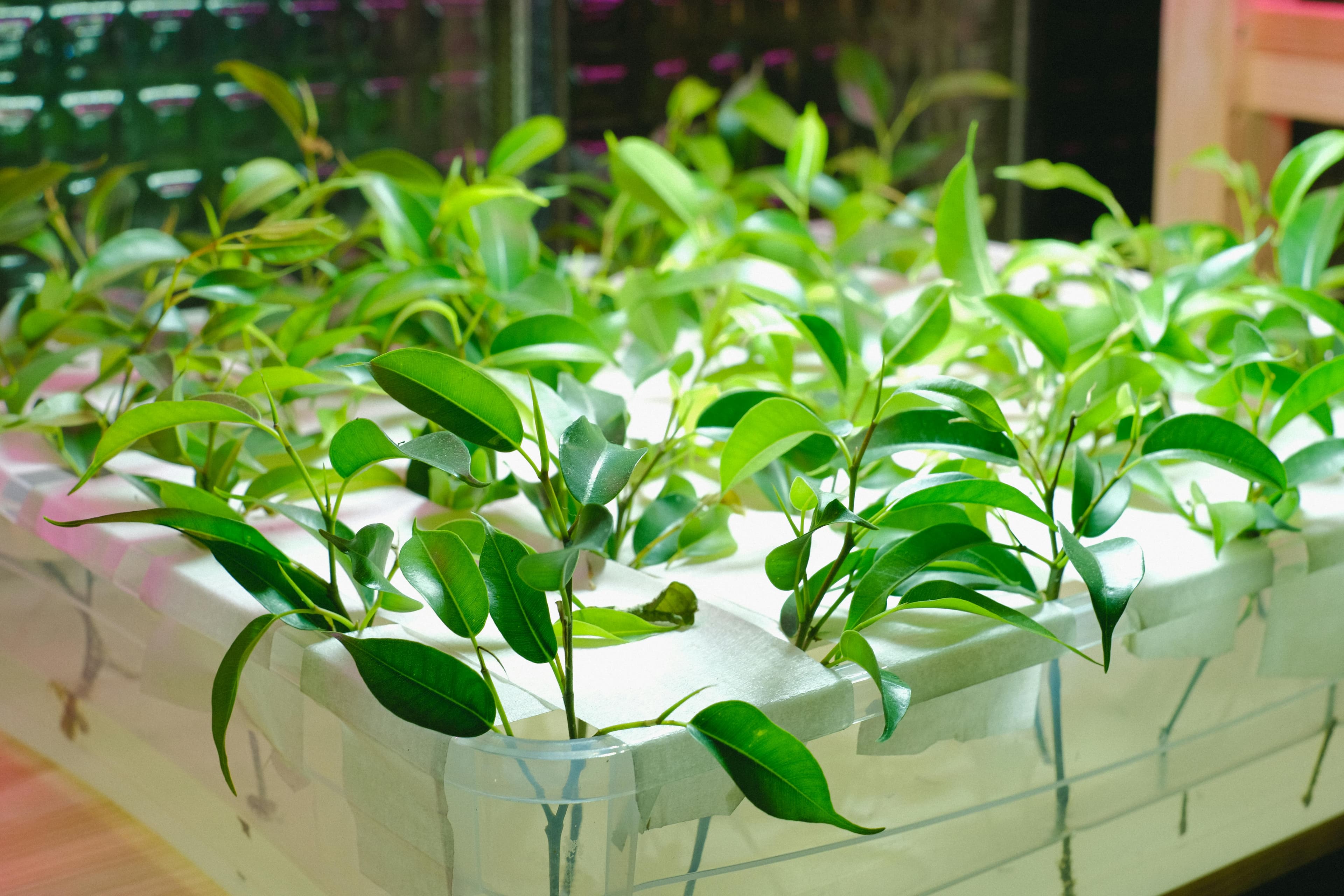
Yellow leaves in hydroponics almost always indicate a nutrient deficiency or pH-driven nutrient lockout — not an absence of nutrients in the reservoir. Diagnosing which nutrient is affected, and whether pH is the root cause, resolves the majority of yellowing cases within 48 hours.
How do you identify the type of yellowing to find the cause?
The pattern and location of yellowing on your plant is the most reliable diagnostic clue. Different nutrient deficiencies affect different parts of the plant in predictable ways because some nutrients are mobile within plant tissue while others are immobile. Understanding this distinction transforms troubleshooting from guesswork to a systematic process.
Mobile nutrients — nitrogen, phosphorus, potassium, and magnesium — can be relocated within the plant. When these nutrients are in short supply, the plant scavenges them from older, lower leaves and redirects them to newer growth at the tips and tops. This is why deficiencies of mobile nutrients show first on the oldest, lowest leaves. Nitrogen deficiency presents as uniform pale yellowing starting at the base of the plant and working upward. Magnesium deficiency shows as interveinal chlorosis — the spaces between veins turn yellow while the veins themselves stay green — on lower and middle leaves.
Immobile nutrients — calcium, iron, manganese, boron, and zinc — cannot be relocated once deposited in tissue. When these nutrients are unavailable, the deficiency appears first on the youngest, newest growth at the tips of branches and the growing point. Iron deficiency presents as interveinal chlorosis (similar pattern to magnesium but on young leaves rather than old ones). Calcium deficiency causes tip burn on new leaves and, in fruiting plants, blossom end rot.
Overwatering-related root problems produce a distinctive pattern: the entire plant appears pale, wilted despite wet roots, and new growth is distorted. This is not a nutrient issue but an oxygen deprivation issue — roots cannot absorb nutrients efficiently when suffocated. In hydroponics, this typically means your air pump has failed, your reservoir temperature is too high, or you are flooding too frequently without adequate drain time.
Is the yellowing caused by pH lockout or an actual nutrient shortage?
Before adjusting nutrient concentrations, always check pH first. This is the single most important diagnostic step in hydroponic troubleshooting. Nutrient lockout — where nutrients are present in solution but chemically unavailable due to incorrect pH — causes identical symptoms to true nutrient deficiency. Treating lockout by adding more nutrients (without fixing pH) only increases the EC without resolving the problem, and may create toxicity issues over time.
Measure your reservoir pH with a freshly calibrated meter. If it reads above 6.5 or below 5.5, correct it before making any nutrient changes. Adjust pH to 5.8–6.2 and observe the plant over the next 24–48 hours. In many cases, leaves already affected by lockout will not recover — chlorotic tissue rarely greens up — but new growth emerging after the correction should appear healthy and green. This confirms pH was the culprit.
If pH is within the correct range, measure EC. Low EC (below 0.8 mS/cm for actively growing plants) confirms the plant is receiving insufficient nutrients. In this case, increase EC gradually — raise by 0.2–0.3 mS/cm at a time, check after 48 hours, and continue raising until growth responds. If EC is within the normal range for your crop and growth stage but deficiency symptoms persist, suspect a specific nutrient imbalance rather than general deficiency. Consider switching to a different nutrient formula or supplementing the likely deficient element.
Water quality can also create specific deficiencies independent of pH and general EC. Soft water or RO water contains almost no calcium or magnesium. Growers using RO water who do not add a calcium-magnesium supplement routinely see calcium tip burn and magnesium interveinal chlorosis even when pH and EC are correct. Adding a dedicated Cal-Mag supplement at 2–5 ml per litre resolves these issues quickly.
What does nitrogen deficiency look like and how do you fix it?
Nitrogen deficiency is the most common nutritional problem in hydroponics and the most straightforward to identify and fix. The characteristic presentation is uniform, generalised yellowing that starts on the oldest leaves at the plant base and progresses upward over days to weeks. Unlike iron or magnesium deficiency (which create patchy or interveinal patterns), nitrogen deficiency causes an even, pale yellow colour across the entire leaf blade. Affected leaves may later turn brown and drop.
In actively growing plants, nitrogen deficiency develops quickly — EC that drops below 0.8 mS/cm can show visible symptoms within 3–5 days. Causes include: reservoir running low without topping up, plants growing faster than expected and exhausting available nitrogen, or using a Bloom (low-nitrogen) nutrient formula during the vegetative growth stage.
Fix nitrogen deficiency by increasing EC with a nitrogen-rich nutrient formula. If you are running a two-part or three-part system, increase the Grow component disproportionately. Add nutrients in small increments, check EC after each addition, and target an EC 0.3–0.5 mS/cm above your previous level. Within 3–5 days, new growth should show improved colour. Yellowed lower leaves will not recover and can be removed once new growth confirms the plant has stabilised.
Prevent recurrence by checking EC every 2 days rather than weekly during fast growth phases. Keep a log of when you add nutrients and how much, noting plant growth stage and ambient temperature (hotter conditions accelerate growth and nutrient uptake).
What other causes of yellowing affect hydroponic plants?
Light stress causes yellowing that is easy to confuse with nutrient deficiency. Insufficient light produces pale, stretched plants with yellowing throughout. In this case, stems between nodes are unusually long and leaves reach toward the light source. Moving the plant closer to the light source or adding supplemental lighting is the fix, not nutrient adjustment.
Too much light — specifically, light intensity that is too high for the crop — can cause bleaching and yellowing of leaves closest to the light. Cannabis, for example, can show light bleaching on uppermost leaves when grow lights are positioned too close. Lettuce and spinach are less susceptible, but LED arrays at 800–1000 µmol/m²/s can bleach tender leaf crops. Increase the distance between light and canopy in 5 cm increments until symptoms stop progressing.
Root rot produces a distinctive whole-plant yellowing accompanied by wilting and a foul smell from the reservoir. Check roots directly — healthy roots are white and firm; rotten roots are brown, slimy, and may appear stringy. Root rot is caused by pythium fungus, which thrives in warm (above 22 °C), poorly oxygenated nutrient solution. Treatment involves removing affected roots, performing a complete reservoir change with fresh solution, lowering reservoir temperature, increasing aeration, and adding beneficial bacteria such as Bacillus subtilis products.
| Symptom pattern | Most likely cause | First action |
|---|---|---|
| Uniform yellowing on old/lower leaves | Nitrogen deficiency | Check EC — raise if below 1.0 |
| Interveinal yellowing on old leaves | Magnesium deficiency | Add Cal-Mag; check pH |
| Interveinal yellowing on new leaves | Iron deficiency / high pH | Check pH first; adjust to 5.8 |
| Yellowing with leaf tip burn | Calcium deficiency | Add Cal-Mag; ensure good aeration |
| Pale plant, long internodes | Insufficient light | Raise light intensity |
| Wilting with wet roots, smell | Root rot (pythium) | Reservoir change, lower temperature |