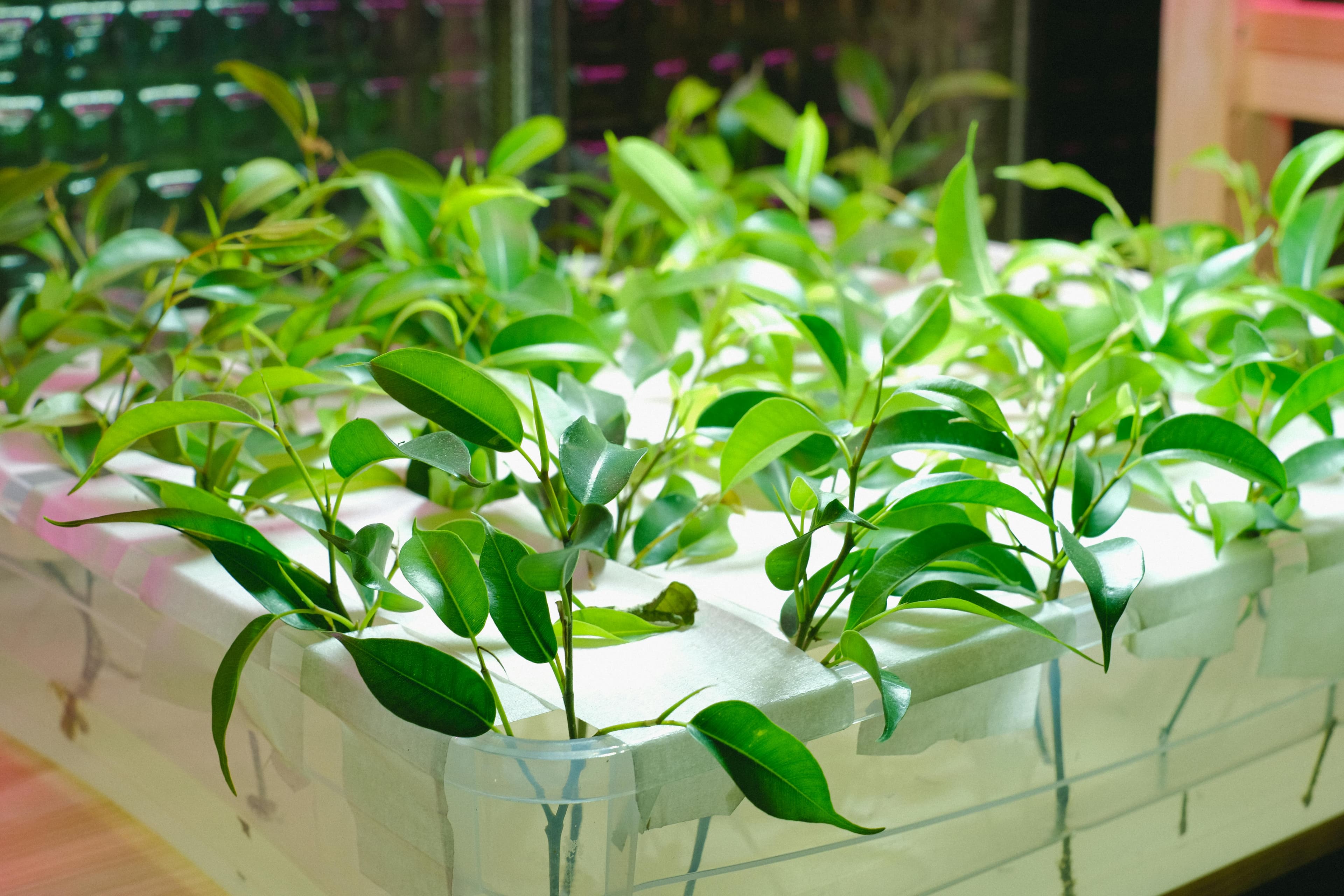
Hydroponic strawberries produce fruit year-round indoors with flavour that consistently surpasses supermarket equivalents. Everbearing varieties in NFT channels or tower systems yield continuously under grow lights, with the first fruits typically appearing 8–12 weeks after transplanting established runners.
Which strawberry varieties are best suited to hydroponic growing?
Strawberry varieties are classified by their fruiting habit, and this classification matters enormously for hydroponic production planning. June-bearing (or short-day) varieties produce a single large flush of fruit once per year in late spring and early summer, triggered by the shortening days of autumn. They produce the highest individual fruit quality and are the commercial standard for fresh market strawberries, but their once-a-year fruiting habit makes them impractical for year-round indoor production.
Everbearing (day-neutral) varieties are the category of choice for hydroponic home growing. These varieties initiate flowers regardless of day length, producing fruit continuously throughout the growing season — or year-round when grown indoors under supplemental lighting. Popular everbearing varieties for hydroponics include Albion, Seascape, Evie-2, and Mara des Bois. Albion is particularly well-regarded for its combination of large fruit, strong flavour, and disease resistance. Mara des Bois is a French variety prized for its intense, almost wild-strawberry flavour.
Alpine strawberries (Fragaria vesca) represent a third category that is often overlooked by beginners. These small, intensely flavoured berries grow from seed (most garden strawberries are propagated as runners, not seeds) and produce continuously without runners. They are compact, shade-tolerant, and extremely productive in NFT channels. Flavour is exceptional — sweeter and more complex than commercial varieties — but individual fruit size is small. They suit home growers who prioritise flavour over yield volume.
Avoid buying strawberry plants from unknown sources, as strawberries are susceptible to several serious viruses (including strawberry mottle virus and strawberry crinkle virus) that persist in plants without obvious symptoms for months before causing significant yield loss. Purchase certified virus-indexed runners or plugs from reputable nurseries. This is particularly important for hydroponic systems where a disease can spread rapidly through shared nutrient solution.
What hydroponic system works best for strawberries?
NFT channels are the commercial standard for strawberry production and work excellently at home scale. Strawberry root systems are compact and fibrous, perfectly suited to 50–75 mm square or round NFT channels. Plants sit in individual net pots spaced 25–30 cm apart in channels, with roots trailing into the flowing nutrient film. The high oxygen availability of NFT suits strawberries particularly well — their roots are sensitive to waterlogging, and the continuous thin film with abundant airspace above prevents the anaerobic conditions that cause root rot.
Tower systems — vertical columns with multiple growing pockets stacked vertically, fed by a drip line at the top — are popular for strawberries specifically because they maximise plant density in a small floor footprint. A single 1.8-metre tower can accommodate 16–20 strawberry plants. Nutrient solution drips from the top pocket, flows down through each layer, and collects in a reservoir at the base for recirculation. The main limitation of tower systems is uneven nutrition: bottom pockets receive more solution flow than top pockets, and nutrient depletion along the flow path can create small growth differences between layers.
DWC is less commonly used for strawberries than for leafy crops because strawberry root systems in full submersion are more susceptible to pythium than in NFT or tower systems. If using DWC for strawberries, strong aeration and reservoir temperatures below 20 °C are non-negotiable. Adding beneficial bacteria (Trichoderma and Bacillus species) significantly reduces pythium risk in DWC strawberry systems.
Ebb and flow with individual containers of coco coir is a forgiving option that suits intermediate growers. Each plant gets its own 2–3 litre container of coco:perlite mix, which is flooded 2–3 times per day. This mimics natural soil conditions more closely than NFT and makes it easy to inspect individual plant health by examining one container at a time.
How do you manage nutrients and day length to trigger fruiting?
Strawberry nutrient management follows a similar stage-based approach to tomatoes, with the key difference being the importance of potassium and calcium for fruit quality. In the vegetative establishment phase (first 4–6 weeks after transplanting), use a balanced nutrient formula at EC 1.0–1.4 mS/cm with adequate nitrogen to encourage leaf development and root establishment. Resist the temptation to push EC higher — overfed young strawberry plants develop excessive vegetative growth at the expense of early fruit production.
As the first flower trusses appear, shift to a higher potassium, lower nitrogen formula at EC 1.6–2.0 mS/cm. Potassium drives sugar transport to developing fruit — the sweetness that makes hydroponic strawberries distinctive compared with field-grown fruit. Calcium is equally critical: ensure at least 150 ppm calcium in solution throughout fruiting to prevent tip burn and internal browning. Many growers use a dedicated Cal-Mag supplement alongside their base nutrients when growing strawberries.
During peak fruiting, EC can be raised to 2.0–2.4 mS/cm. Some experienced growers raise EC slightly in the final week before planned harvest batches — a technique borrowed from tomato production — to concentrate sugars and aromatics. The effect is modest but noticeable in side-by-side taste comparisons.
Day length manipulation is a powerful tool for everbearing varieties. While everbearing varieties produce some flowers regardless of photoperiod, flowering and fruiting is enhanced under long days (14–16 hours of light). Indoor growers using grow lights set to 14–16-hour photoperiods see consistent, heavy fruiting throughout the year. To trigger a rest period and rejuvenation of older plants, some growers reduce the photoperiod to 8–10 hours for 4–6 weeks, then return to 16 hours to stimulate a fresh flush of vigorous growth and heavy fruiting.
What are the most common problems with hydroponic strawberries?
Grey mould (Botrytis cinerea) is the most damaging disease of strawberries in enclosed growing environments. It appears as grey-brown fuzzy patches on ripe and overripe fruit, and can spread rapidly through a crop in high humidity conditions. Prevention focuses on airflow — maintain a gentle fan movement through the canopy, space plants adequately (25–30 cm minimum), harvest ripe fruit promptly, and remove any dead leaves or spent flowers immediately. Humidity above 80% significantly increases Botrytis risk; target 60–70% RH.
Powdery mildew affects strawberry leaves in warm, dry conditions — the opposite of Botrytis. It appears as white powdery patches on upper leaf surfaces, eventually causing leaf curling and deformed fruit. Mildew-resistant varieties (Albion has good resistance) are the best preventative measure. Potassium bicarbonate sprays and adequate plant spacing also help. Avoid overhead wetting of leaves when watering.
Runner production in everbearing varieties can divert significant energy from fruit production. Remove runners as soon as they appear — these horizontal stems extend from the mother plant seeking new ground. In a hydroponic system, runners grow into the air or wrap around equipment, wasting the plant's energy. Pinching them off weekly takes only a few minutes and demonstrably improves fruit yield.
Root problems — specifically pythium and red steele root rot — are more serious in strawberries than in many other crops because strawberry roots are relatively delicate. Monitor root colour regularly; healthy roots are white to pale tan. Brown discolouration spreading from root tips indicates root disease. Address promptly with reservoir temperature reduction, increased aeration, beneficial bacterial inoculants, and if necessary, hydrogen peroxide treatment.