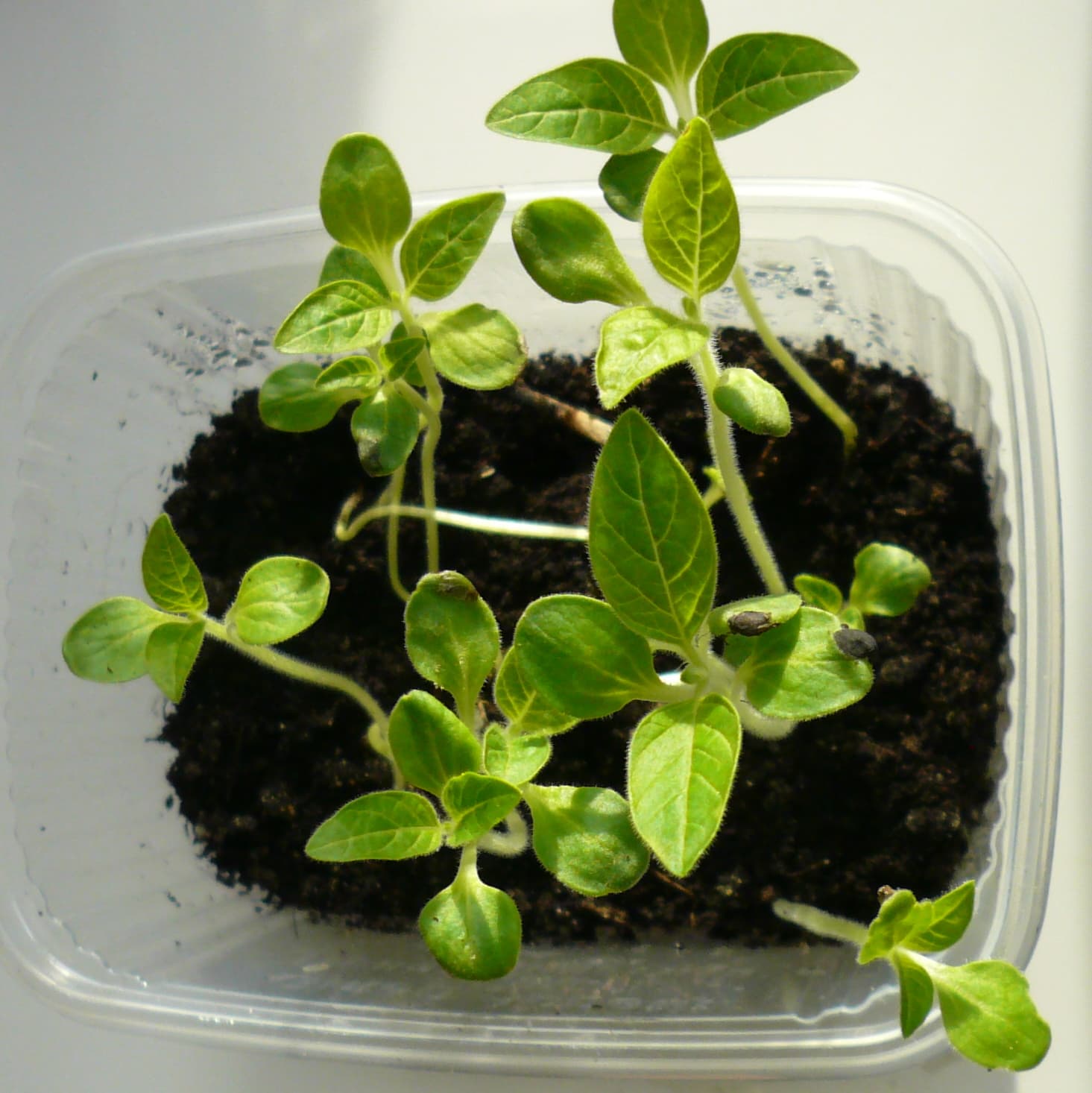
Edible flowers — nasturtiums, violas, pansies, borage, and calendula — can all be grown hydroponically at EC 1.0–1.8 and 14–16 hours of light per day, producing harvestable blooms in 4–8 weeks from transplant. They are intermediate-level crops because they require precise pinching management, strict harvest timing for maximum bloom quality, and species-specific light and temperature parameters.
How do you sow and establish edible flowers in a hydroponic system?
Most edible flowers perform best when germinated in a seed-starting medium and then transplanted into the hydroponic system at the seedling stage, rather than being direct-seeded into net pots.
Germination setup: Sow seeds into rockwool cubes (3.8 cm or 5 cm), coco coir plugs, or a seed-starting tray filled with perlite. Moisten the medium with plain pH-adjusted water at 5.8–6.2. Cover with a humidity dome and place under low-intensity light (50–100 µmol/m²/s) or on a bright windowsill. Maintain temperature at 18–22°C. Most edible flower species germinate within 7–14 days under these conditions.
Species-specific germination notes:
- Nasturtium (Tropaeolum majus): Large seeds that benefit from 12–24 hours of pre-soaking in warm water before sowing. Germinates in 7–12 days. Sow one seed per cube.
- Viola / Pansy (Viola tricolor, V. × wittrockiana): Very small seeds; sow 2–3 per cube and thin to one after germination. Requires cool temperatures (15–18°C) for optimal germination — warmth above 22°C suppresses germination. Germinates in 10–14 days.
- Borage (Borago officinalis): Germinates readily in 7–10 days. Pre-soaking is not necessary. Dislikes root disturbance, so handle transplant carefully.
- Calendula (Calendula officinalis): Curled, distinctive seeds. Germinates in 7–10 days. Can tolerate a wider temperature range than violas.
Transplanting into the system: Once seedlings have 2–3 true leaves (typically 14–21 days after sowing), transfer rockwool cubes into net pots and place in the hydroponic system. Begin with dilute nutrient solution at EC 0.8–1.0 for the first week, then raise to target EC.
How do you nurture edible flowers through vegetative growth before blooming?
The vegetative phase — from transplant to first flower bud formation — is when light, nutrients, and temperature management create the structure that determines how many flowers a plant ultimately produces.
Nutrient parameters:
- EC: 1.0–1.4 mS/cm during vegetative phase; raise to 1.4–1.8 mS/cm once flower buds form
- pH: 5.8–6.5 for most edible flower species; violas and pansies prefer the higher end of this range (6.2–6.5)
- Nutrient balance: during vegetative growth, use a balanced or slightly nitrogen-forward formula to develop leaf and stem mass. Once flower buds appear, shift to a lower-nitrogen, higher-phosphorus and potassium formula (a bloom formula) to support flower development and colour intensity
- Avoid excess nitrogen during bloom phase: high nitrogen in flowering plants produces lush leaves but reduces flower production and can cause petals to lose colour saturation
Light requirements:
- PPFD: 200–400 µmol/m²/s for violas, pansies, and borage; 300–500 µmol/m²/s for nasturtiums and calendula
- Photoperiod: 14–16 hours per day — most edible flowers are long-day plants and will flower more abundantly with extended photoperiods. However, violas and pansies are cool-season crops that perform poorly above 22°C; prioritise temperature control over photoperiod extension for these species
- DLI target: 12–20 mol/m²/day
Temperature: This is the most species-differentiated parameter. Nasturtiums and calendula prefer 15–22°C but tolerate up to 27°C. Violas and pansies require cool temperatures of 12–20°C to maintain quality — above 22°C they become leggy, and flower production declines sharply. In India, violas are a winter edible flower crop (November–February); growing them year-round requires active cooling.
How do you care for edible flowers — pinching, training, and pest management?
Pinching is the defining care technique for hydroponic edible flowers, transforming a single-stemmed plant into a bushy, multi-branching structure that produces dramatically more blooms.
Pinching for bushy growth:
- At 3–4 weeks after transplant, when plants have 4–6 true leaves, pinch out the main growing tip between your fingernails or with sharp scissors, just above the second or third leaf node.
- Two new shoots emerge from the leaf nodes below the cut. When each new shoot reaches 4–6 leaves, pinch those growing tips as well.
- Repeat this process 2–3 times over the vegetative phase to create a densely branched plant. A single nasturtium pinched three times may carry 30–50 simultaneous blooms compared to 5–8 blooms on an unpinched plant.
Deadheading: Remove spent (faded, wilted) flowers immediately. Allowing flowers to set seed signals the plant to reduce new bud production. Daily deadheading during peak bloom extends the productive period by several weeks.
Pest management: Edible flowers are notably susceptible to aphids, which are drawn to the tender new growth at growing tips. In a hydroponic setup, inspect plants daily — aphids can multiply from a single individual to a colony of hundreds within 7–10 days. Remove aphids manually with a damp cloth or spray with a dilute neem oil solution (2 ml neem per litre of water with a drop of liquid soap as emulsifier). Do not use any synthetic pesticide on edible flowers, even one marked as safe for vegetables — petals are eaten whole and absorb surface residues readily.
Root zone management: Edible flowers are more susceptible to root rot than leafy crops because they are grown at relatively high EC. Ensure adequate dissolved oxygen in DWC systems (an air pump running 24/7 is not optional), keep reservoir temperature below 22°C, and replace the entire nutrient solution every 7–10 days.
How and when should you harvest edible flowers for best quality?
Harvest timing determines the flavour, visual quality, and shelf life of edible flowers. The morning harvest window is specific and significant.
| Species | Days to First Bloom (from transplant) | Harvest Stage | Shelf Life (refrigerated) |
|---|---|---|---|
| Nasturtium | 28–40 days | Fully open, vivid colour | 3–5 days |
| Viola | 21–35 days | Fully open, not browning at edges | 5–7 days |
| Pansy | 21–35 days | Fully open, petals firm | 5–7 days |
| Borage | 35–50 days | Fully open star shape, blue colour | 1–2 days (delicate) |
| Calendula | 42–56 days | Fully open, petals extended | 4–6 days |
The morning harvest window: Harvest edible flowers in the morning, at least 1–2 hours after the grow lights have turned on (or after sunrise for natural light setups), but before the temperature peaks in the afternoon. The reason is twofold: morning flowers contain the highest concentration of aromatic compounds (terpenes and flavonoids), and the petals are firm and turgid from overnight recovery. Flowers harvested in the afternoon are often slightly wilted and have lower aromatic intensity.
Harvest technique: Use small, sharp scissors. Cut the flower stem 1–2 cm below the flower head. Do not touch the petals with fingers any more than necessary — oils and pressure from handling cause bruising and browning. Place harvested flowers in a single layer on damp kitchen paper in an airtight container and refrigerate immediately.
Culinary uses: Nasturtiums have a peppery, watercress-like flavour and are used in salads, as garnishes on cheese plates, and stuffed with cream cheese. Violas and pansies are nearly flavourless and are used purely as visual garnishes on cakes, salads, and cocktails. Borage tastes faintly of cucumber and is traditionally floated in gin drinks and used as a cake decoration. Calendula petals are mildly bitter and saffron-like; they are used as a garnish, in rice dishes as a saffron substitute, and in herbal teas.
What is the nutritional and culinary value of edible flowers?
Edible flowers are used in small quantities, so their contribution to daily nutrition is modest in absolute terms — but they contain concentrated levels of bioactive compounds including flavonoids, carotenoids, and anthocyanins that are not present in most common vegetables.
| Species | Key Compounds | Culinary Use in India |
|---|---|---|
| Nasturtium | Glucotropaeolin (mustard-oil glycoside), vitamin C (>100 mg/100g), lutein | Garnish on salads, raita, fusion chaats |
| Viola / Pansy | Anthocyanins (malvidin, delphinidin), rutin, flavonoids | Cake decoration, mocktail garnish |
| Borage | GLA (gamma-linolenic acid in seeds), pyrrolizidine alkaloids (trace — avoid in large quantity), vitamin C | Drink garnish, gin cocktails |
| Calendula | Lutein, zeaxanthin, flavonoids, triterpenoids | Saffron substitute in rice, herbal tea, garnish |
| Nasturtium leaves | Vitamin C, beta-carotene, isothiocyanates | Eaten as salad leaf alongside flowers |
Safety notes: All edible flowers listed here are considered safe when consumed in culinary quantities (1–5 flowers per serving). Borage contains trace pyrrolizidine alkaloids and should not be consumed daily in large amounts or during pregnancy. Only consume flowers that were grown without pesticides — flowers intended as decoration in garden centres may be treated with pesticides not approved for food use. Always verify that the flowers are specifically labelled or known to be food-safe before consuming.
The market for edible flowers in India is growing alongside the expansion of café culture, fusion cuisine, and home baking. Hydroponically grown edible flowers can command premium prices — ₹200–600 per small punnet in metro cities — making them an attractive high-value addition to an urban farm setup.