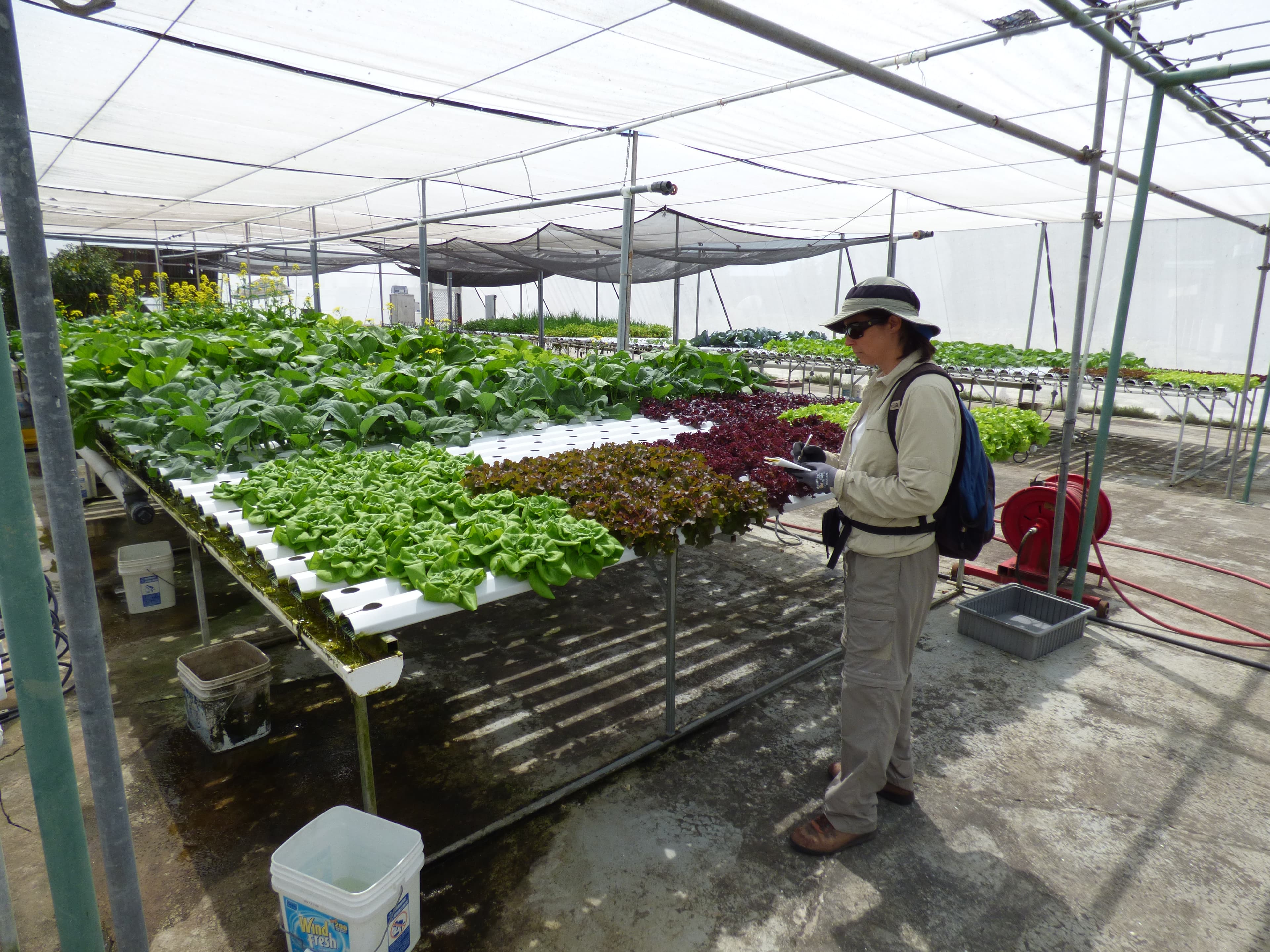
Proper ventilation requires replacing your grow room's air volume every 1–3 minutes. CO2 supplementation to 1,200–1,500 ppm can increase yields by 20–30% but only pays off when all other variables (light, temperature, nutrients) are already optimised. Negative pressure prevents unfiltered air and odours from escaping.
How Do You Calculate CFM Requirements for a Grow Room?
CFM (Cubic Feet per Minute) is the standard measurement for inline fan capacity. Correctly sizing your ventilation system requires accounting for room volume, heat load, and any resistance from ducting and carbon filters.
Step 1: Calculate room volume Length (ft) × Width (ft) × Height (ft) = cubic feet
Example: 10 ft × 10 ft × 8 ft = 800 cubic feet
Step 2: Determine target air exchange rate
- Passive grows (no CO2 supplementation): Replace room volume every 1–3 minutes → 800 ÷ 2 = 400 CFM baseline
- Sealed rooms with CO2: Replace room volume every 3–5 minutes → 800 ÷ 4 = 200 CFM for CO2 retention, plus supplemental circulation
Step 3: Apply resistance derating Every 90° duct elbow reduces effective CFM by 10–15%. Carbon filters add 20–30% resistance. A fan rated at 400 CFM with a carbon filter and two elbows in the duct run may deliver only 260–300 CFM in practice.
Derating formula:
- Carbon filter: multiply rated CFM × 0.75
- Each 90° elbow: × 0.90
- Each metre of ducting beyond 3 m: × 0.97
Always oversize fans and use a speed controller to dial back airflow. Running a larger fan at 60–70% speed is quieter and extends motor life compared to a correctly-sized fan running at full speed.
Fan sizing quick reference:
| Room Size (sq ft) | Ceiling Height | Minimum Fan Size |
|---|---|---|
| 25 sq ft | 8 ft | 200 CFM |
| 50 sq ft | 8 ft | 400 CFM |
| 100 sq ft | 8 ft | 600–800 CFM |
| 200 sq ft | 8 ft | 1,200–1,600 CFM |
| 400 sq ft | 10 ft | 2,500–3,000 CFM |
What Is Negative Pressure and How Do You Set It Up?
Negative pressure means the air pressure inside the grow room is slightly lower than the surrounding space. This ensures that when air moves, it moves inward — preventing unfiltered grow room air (containing humidity, CO2, and potentially odours) from leaking out through gaps in walls, doors, and ducting.
Creating negative pressure:
- Your exhaust fan must pull more CFM than any intake fans supply
- Rule of thumb: intake passive area or intake fan should supply 80–90% of exhaust CFM
- This creates a slight negative pressure (typically 5–15 Pa below ambient)
Visual confirmation: A piece of paper or lightweight plastic held near a door crack should be sucked toward the room, not pushed away. If it flutters outward, you have positive pressure — reverse the imbalance.
Setup for a sealed CO2-supplemented room:
A sealed room requires a fundamentally different ventilation philosophy. The goal is to retain CO2, so you do not want continuous air exchange. Instead:
- A sealed room uses an air conditioner and dehumidifier to manage temperature and humidity (no outside air exchange during the grow cycle).
- CO2 is injected via a regulator and controller.
- A small recirculation fan (not exhaust) provides internal air movement for even CO2 distribution and leaf boundary layer disruption.
- The exhaust fan only runs between cycles or if CO2 accidentally rises above 2,000 ppm.
This is the expert-level configuration that maximises CO2 supplementation benefits.
How Do You Safely Supplement CO2 in a Grow Room?
Atmospheric CO2 is approximately 420 ppm. Plants evolved at lower historical concentrations and can utilise higher levels — up to approximately 1,500 ppm — when all other growth factors are non-limiting.
CO2 supplementation targets:
- Ambient (no supplementation): 400–500 ppm
- Mild supplementation: 800–1,000 ppm
- Optimal range for most crops: 1,200–1,500 ppm
- Diminishing returns above: 1,500 ppm
- Plant growth inhibition: above 2,000 ppm
- Human safety threshold (OSHA 8-hour): 5,000 ppm — never approach this in occupied spaces
CO2 delivery systems:
| Method | Cost | Control | Output | Best For |
|---|---|---|---|---|
| Compressed CO2 tank + regulator | $150–400 | Excellent (solenoid + controller) | High | Serious home growers |
| CO2 bag (mycelium-based) | $20–40 | None (passive) | Low | Small grows, supplemental only |
| CO2 generator (propane/natural gas) | $200–600 | Good | Very High | Large commercial rooms |
| Dry ice | $5–15 | Poor | Variable | Emergency / experimental only |
| DIY fermentation (sugar + yeast) | $5–10 | None | Very Low | Not recommended for growing |
Compressed CO2 setup:
- CO2 tank (20–50 lb cylinder from welding supply)
- Dual-stage regulator with solenoid valve
- NDIR CO2 controller (e.g., Titan Controls Atlas 3, Inkbird IBS-CO2)
- Distribution tubing running to the intake of your recirculation fan
The controller opens the solenoid when CO2 drops below your setpoint and closes it when the target is reached. Set the controller to only inject CO2 during the lights-on period — plants do not use CO2 in darkness.
Critical safety requirement: Install a CO2 alarm at floor level (CO2 is heavier than air and accumulates low). Never enter a sealed CO2 room without first ventilating for several minutes.
What Is the Role of Carbon Filters in Grow Room Ventilation?
Carbon filters (activated charcoal canisters) are fitted to the exhaust ducting to adsorb volatile organic compounds (VOCs) before air is discharged. For most culinary herb and vegetable grows, odour control is a courtesy concern. For higher-value crops with strong aromatic profiles, it is essential.
How activated carbon works: Activated carbon has an enormous surface area (500–1,500 m² per gram) that traps VOC molecules through adsorption. Carbon filters are rated by CFM and by the weight of activated carbon inside — more carbon means longer filter life.
Carbon filter sizing: Match CFM rating to your fan. A 400 CFM fan requires a 400 CFM carbon filter (or larger). Undersizing causes channelling — air takes the path of least resistance through the carbon bed without adequate contact time.
Filter lifespan:
- Typical lifespan: 12–24 months in continuous use
- High humidity accelerates carbon saturation — keep grow room RH below 70% at the filter inlet
- When filters begin passing odour, replace the carbon media (many filters allow refilling) or the entire unit
Pre-filter sleeves: Fit a polyester pre-filter sleeve over the carbon filter intake to catch particulates. Replace monthly. This significantly extends carbon media life.